For the last week, we've been driving the 2026 Chevrolet Blazer EV SS. It packs a massive 102-kWh usable battery capacity and can manage an impressive 302 miles of EPA range. The electric SUV produces 615 horsepower and features huge 22-inch wheels wrapped in sticky summer tires. It's about as excessive as you would expect from General Motors, considering the automaker has signed off on the Escalade IQ, Hummer EV, and the Corvette ZR1.
But what's it like to charge this thing?
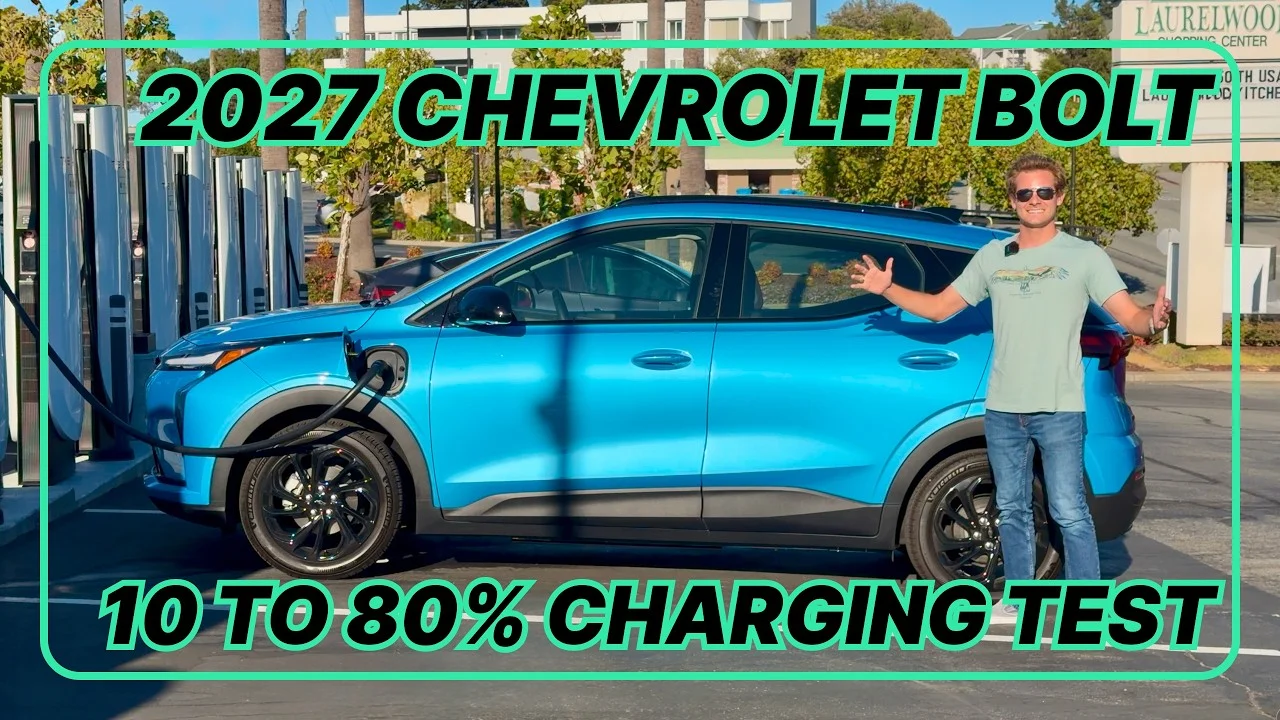
We ventured out to a V3 Supercharger to test just how long the Blazer EV needs to go from 10 to 80%. General Motors doesn't provide a ton of information when it comes to the charging speeds on this car, besides quoting the 190-kW peak rate along with a figure stating the SUV can add 78 miles in 10 minutes. Both of those figures don't reveal much about the car's broader charging performance, as we don't know how long that 190-kW rate can be sustained or what battery percentage range is required to add those 78 miles. So, we found out for ourselves.
Before our test, we pre-conditioned the battery for roughly an hour before plugging in and rolled up with a 7% state of charge. The V3 Supercharger we utilized was a 325-kW unit delivering 480V and up to 900 amps of current. In other words, this Supercharger was more than capable, and we should see no limits due to current.
After a few minutes of charging, we saw a peak charge rate of 184 kilowatts, and this was sustained up to 32% state of charge. At this point, the charge rate was massively tapered, and by 40%, the power in dropped to just 70 kW. Put differently, our charge rate dropped by 62%.
After the sharp drop, the charging rate began to rebound and reached 99 kilowatts at 76%. After that point, it began to drop again, but the rate of change was much less dramatic than the original dip.
Our 2026 Blazer EV SS went from 10 to 80% in 47 minutes and 12 seconds. This charging time is definitely on the higher side, considering our recent testers, such as the Subaru Solterra and Toyota bZ4X, managed the same feat in roughly 27 minutes.
At first, we assumed this weird charging behavior involving the drop was caused by some sort of fault. While no error messages were displayed, we dove deeper into this charging curve. After much analysis, we took a look at other GM EV charging results.
Interestingly, this peculiar charging behavior was seconded in another test completed by our friend Tom Moloughney. Tom tested the Cadillac Lyriq, which uses the same battery as the Blazer EV SS. His results demonstrated a very similar charging profile consisting of a sharp drop followed by a "resuscitation period."
Nevertheless, while this charging curve was not impressive, we won't rule it out for road trips. You still have nearly 300 miles of real-world range, and if you plan on stopping to eat while you charge, the 47 minutes it takes to go from 10 to 80% shouldn't be a dealbreaker.