Up Next
Model Reviews
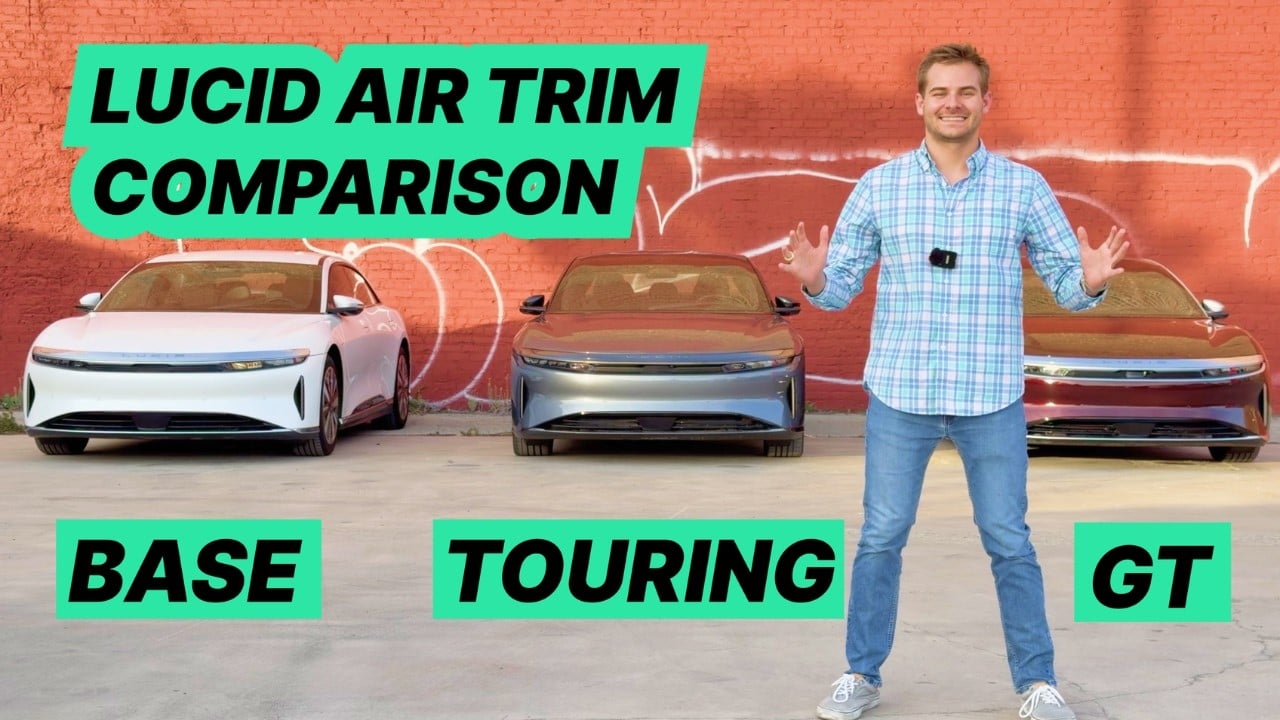
2026 Lucid Air Trim Comparison: Pure vs Touring vs Grand Touring
We compare the 2026 Lucid Air Pure, Touring, and Grand Touring.

Andrew Lambrecht
Apr 2, 2026
Read resource
Andrew Lambrecht
Project Engineer
Jan 22, 2026
The 2011 Nissan LEAF was the first mass-produced, affordably-priced EV of the modern era. Packing a 24kWh lithium-ion battery pack and a 107-horsepower front-mounted electric motor, there wasn’t much distinguishing the LEAF from a compliance EV. However, it was built on its own bespoke platform and even offered 46kW DC fast charging.
Early LEAF model years from 2011 to 2017 weren’t too highly regarded. Plagued by steep battery degradation – thanks to their non-liquid cooled battery packs and a somewhat eccentric design language – the early Nissan LEAF models did not hold up well against time.
Nissan improved newer LEAF models drastically. With a 2018 refresh, the newer LEAF models are now far more desirable and provide a great option for someone looking for an affordable EV for everyday use. The newer model years still don't have battery packs with liquid cooling, continue to rely on the outré CHAdeMO charging connector, and aren’t as tech-centric as some of the more premium EVs. However, they do provide 200+ miles of range, 200+ horsepower output, and great basic drivability.
Nissan LEAFs are also interesting from a federal EV tax credits perspective. New Nissan LEAFs qualify for the full $7,500 federal tax credit thanks to their manufacturing location in Tennessee. There are also plenty of used Nissan LEAFs being sold for under $25,000, making them eligible for the $4,500 used EV tax credit.
The first Nissan LEAF proved electric cars could be appealing to the masses. Initial models traveled 73 miles on a single charge, eventually reaching 107 miles by 2017 with the introduction of the 30kWh battery pack. While it made significant progress in mass adoption, low range and high degradation rates mean these are typically only recommended for short-range local driving.
Battery size: 24 to 30kWh
Charging: 50kW, CHAdeMO
Range: 73 - 107 miles
Power: 107 horsepower
Available trims: S, SV, and SL
In 2018, Nissan improved the LEAF significantly. Range jumped to 151 miles and power increased to 147 horsepower. This year also introduced the e-Pedal, a highly-refined one-pedal driving system. The design moved toward a more austere, mainstream look, and ProPilot Assist was introduced for Level 2 autonomy.
Battery size: 40kWh
Charging: 50kW, CHAdeMO
Range: 151 miles
Power: 147 horsepower
Available trims: S, SV, and SL
Nissan introduced the "Plus" lineup this year, featuring a 62kWh battery and a more powerful 214-horsepower motor. This made the LEAF a much more compelling rival to the Bolt EV, though it continued to rely on the aging CHAdeMO port for fast charging.
Battery size: 40 to 62kWh
Charging: 50 to 100kW, CHAdeMO
Range: 151 to 226 miles
Power: 147 to 214 horsepower
Available trims: S, SV, SL, S Plus, SV Plus, and SL Plus
The 2020 model year standardized an 8.0” center display with Apple CarPlay and Android Auto. Nissan also expanded standard safety tech with automatic emergency braking and blind spot warnings. Hardware remained unchanged through 2021.
Battery size: 40 to 62kWh
Charging: 50 to 100kW, CHAdeMO
Range: 149 to 226 miles
Power: 147 to 214 horsepower
Available trims: S, SV, SL, S Plus, SV Plus, and SL Plus
Nissan slashed prices in 2022 to make the LEAF the least expensive EV on the market. For 2023, the car received a minor cosmetic facelift with a backlit front badge and new wheels, but the lineup was stripped down to just two trims: S and SV Plus.
Battery size: 40 to 62kWh
Charging: 50 to 100kW, CHAdeMO
Range: 149 to 212 miles
Power: 147 to 214 horsepower
Available trims: S and SV Plus
These years served as a bridge before the major redesign. The 2024 and 2025 models carried over the two-trim strategy and the 8-inch touchscreen. Despite the industry’s shift toward the NACS standard, these models remained the last new EVs in the U.S. to ship with the CHAdeMO port.
Battery size: 40 to 62kWh
Charging: 50 to 100kW, CHAdeMO
Range: 149 to 212 miles
Power: 147 to 214 horsepower
Available trims: S and SV Plus
The 2026 model year is a complete transformation. Ditching the original hatchback profile for a modern crossover design, the LEAF finally moves to a liquid-cooled battery pack. Most importantly, it has officially transitioned to the NACS (Tesla) port for fast charging, offering up to 150kW speeds. The interior features a dual-screen setup and a significant upgrade in material quality.
Battery size: 52 to 75kWh (Liquid-cooled)
Charging: Up to 150kW DC (NACS port)
Range: Up to 303 miles
Power: 174 to 214 horsepower
Available trims: S+, SV+, and Platinum+
Used EVs
About the Author
Andrew Lambrecht
Project Engineer
Andrew Lambrecht is a project engineer at Ever and a leading voice in the electric vehicle sector. An industrial engineer by training and a prolific contributor to outlets like Forbes, Business Insider, InsideEVs, and MSN, Andrew blends technical expertise with sharp insights on EVs, mobility trends, and charging.
Up Next
Model Reviews
We compare the 2026 Lucid Air Pure, Touring, and Grand Touring.
Andrew Lambrecht
Apr 2, 2026
Read resource

Watch
Model Reviews
Is the 2025 VinFast VF8 finally ready for prime time? We review the 402-hp Vietnamese EV, featuring a competitive $37,000 starting price, 10-year warranty, and massive tech upgrades.
Andrew Lambrecht
Mar 31, 2026

Watch
Model Reviews
The 2026 Subaru Uncharted saw a surprisingly quick 10 to 80% charge time.
Andrew Lambrecht
Mar 24, 2026

Watch
Model Reviews
Buying a used Tesla is overwhelming. We simplified it. Here are the 4 best used Tesla models for your budget, including the specific hardware specs you need to look for.
Andrew Lambrecht
Mar 18, 2026

Watch
Model Reviews
We compare the 2020 "OG" Model Y to the 2026 "Juniper" to see if six years of hardware shifts, interior refreshes, and exterior changes make the new Model Y worth it.
Andrew Lambrecht
Mar 12, 2026

Watch
Model Reviews
Toyota dropped the "4X" and added the value. With a 26-minute charging time and $5k in incentives, the 2026 bZ is finally ready for the masses.
Andrew Lambrecht
Mar 11, 2026

Watch
Model Reviews
2026 Subaru Solterra Review: 338HP, More Range, & Supercharger Test
Andrew Lambrecht
Feb 20, 2026